At Westerton Primary School, our curriculum is firmly rooted in Scotland’s Curriculum for Excellence, designed to develop the four capacities - successful learners, confident individuals, responsible citizens, and effective contributors - through the four contexts for learning and shaped by the seven design principles to ensure a broad, balanced, and engaging educational experience for every child.
DISCERE EST VIVERE WESTERTON SCHOOL WESTERTON PRIMARY SCHOOL CURRICULUM RATIONALE Our curriculum is the totality of all that is planned for our pupils. It is inclusive, equitable and ambitious for every learner, empowering them to thrive in a rapidly changing world. Successful Learners WE AIM TO NURTURE THE FOUR CAPACITIES At the centre of our educational approach are the four fundamental capacities, which reflect the lifelong nature of learning. Our curriculum is designed to empower every child to know themselves as individuals and develop the attributes needed to thrive in a rapidly changing, digital world. With enthusiasm and motivation for learning, determination to reach high standards, and the ability to think creatively and independently. B Confident Individuals With self-respect, secure values, and the ambition to live as independently as possible. THE FOUR CONTEXTS FOR LEARNING We define our curriculum as the totality of all that is planned for our pupils. This is experienced across four distinct but interconnected contexts, visualised by the Curriculum for Excellence 'heart'. Opportunities for personal achievement Recognising and celebrating success both within and beyond the classroom to build confidence. Interdisciplinary learning Helping children make connections across Responsible Citizens With respect for others and commitment to participate responsibly in political, social, and cultural life. Be kind, be happy, believe in yourself, and achieve your best. 3 Effective Contributors With an enterprising attitude, resilience, and the ability to work in partnership and lead. BREADTH OF LEARNING: THE 8 CURRICULAR AREAS Westerton Primary ensures a broad and balanced educational experience by delivering high-quality learning across 8 curricular areas. EXPRESSIVE ARTS: Art and design, drama, dance, and music. HEALTH AND WELLBEING: Mental, emotional, social, and physical wellbeing, including PE, food, and health. LANGUAGES: English, Gaelic, modern languages, and classical languages. MATHEMATICS: Development of number, money, measurement, shape, position, and information handling. different subjects 3 and apply their learning to real-life situations. Ethos and life of the school as The Curriculum 'the totality of all that is planned for children and young people throughout 4 RELIGIOUS AND MORAL EDUCATION: Curriculum areas 5 Exploring different world religions and their education' and subjects developing moral values. a community Building a safe, secure environment where children feel valued Providing a broad 6 SCIENCES: Understanding the world through and develop a sense of belonging. general education (BGE) that balances knowledge and skills. planet Earth, forces, electricity, and biological systems. 8 PEDAGOGY: PLAY AND ENQUIRY Our teaching methods are active and motivating, designed to meet the needs of contemporary learners. 六 PEDAGOGY OF PLAY: Recognising that children use their innate meta-skills as they test, tinker, and explore the world around them from birth. PUPIL ENQUIRY-BASED LEARNING: Developing skills so that children can think for themselves, challenge ideas, and find their own solutions to complex problems. LEARNER AGENCY: We empower learners to have agency in their individual learner journeys, listening to their motivations and aspirations to inform our design. RIGHTS RESPECTING We uphold the Rights of the Child in all that we do. INCLUSIVE We value every child and promote equity and belonging. 1234567 SOCIAL STUDIES: Understanding people, place, and society, including history and geography. TECHNOLOGIES: Including computing science, food technology, and digital literacy. FOUNDATIONS OF DESIGN: PRINCIPLES AND RIGHTS Our curriculum is built on the Rights of the Child: we believe every child is entitled to a coherent curriculum from 3 to 18 that maximises their individual potential. Our design is guided by seven key principles: CHALLENGE AND ENJOYMENT: Every child should find learning motivating and experience an appropriate level of challenge. BREADTH: A wide range of experiences in and out of the classroom. PROGRESSION: Building continuously on earlier knowledge from nursery through to secondary. DEPTH: Developing the capacity for advanced levels of thinking. COHERENCE: Clear links between different strands of learning. RELEVANCE: Ensuring children understand the purpose and value of their learning. PERSONALISATION AND CHOICE: Responding to individual needs and supporting unique talents. AMBITION FOR ALL High expectations and support for every learner to succeed. PARTNERS IN LEARNING Working together with children, families and our wider community. READY FOR LIFE Equipping children with skilts, values and confidence for a bright future.

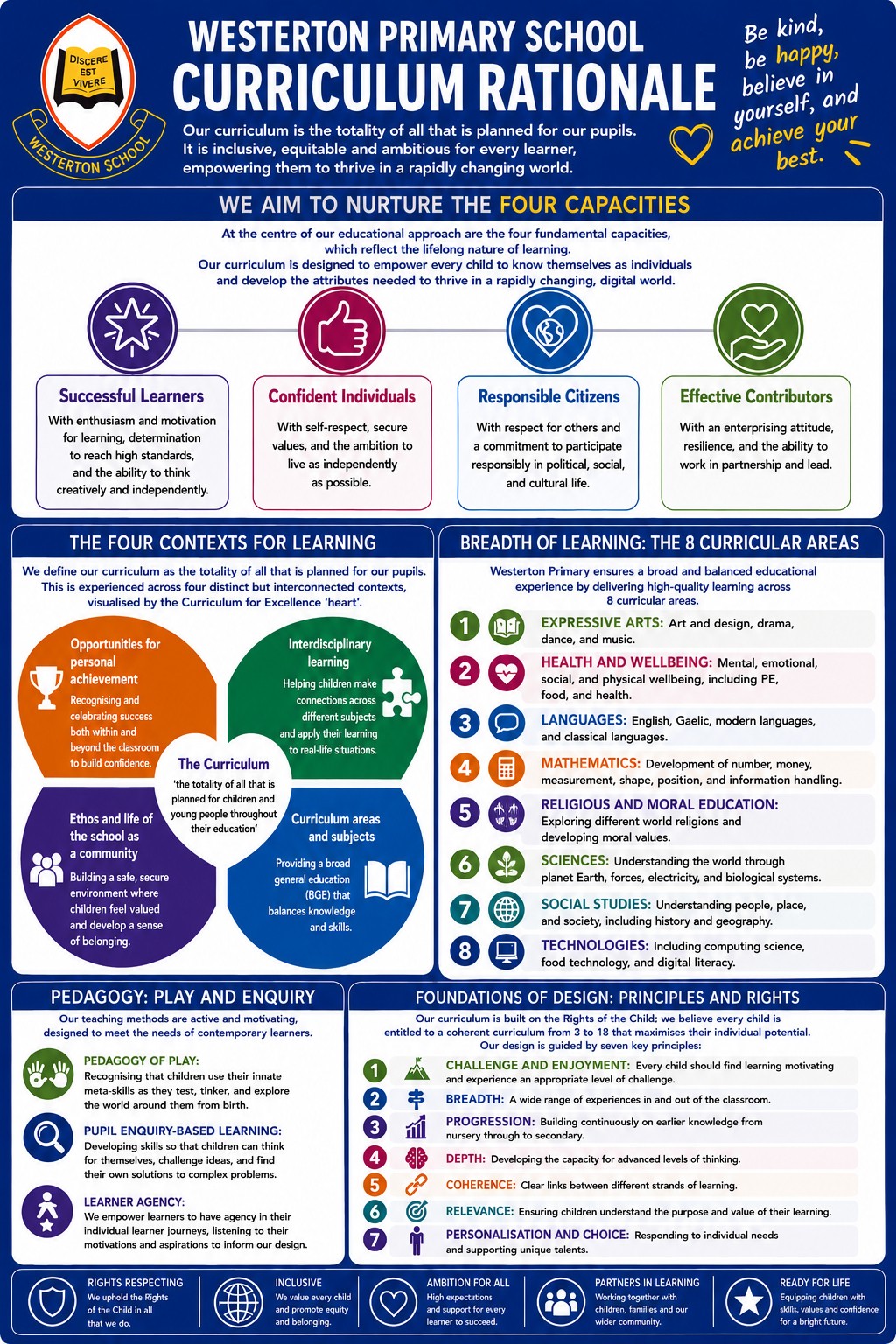
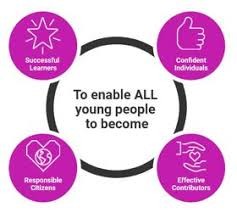
The four capacities, reflect the lifelong nature of learning. Our curriculum is designed to empower every child to know themselves as individuals and develop the attributes needed to thrive in a rapidly changing, digital world.

We aim to nurture the four capacities:

  • Successful Learners: With enthusiasm and motivation for learning, determination to reach high standards, and the ability to think creatively and independently.
  • Confident Individuals: With self-respect, secure values, and the ambition to live as independently as possible.
  • Responsible Citizens: With respect for others and a commitment to participate responsibly in political, social, and cultural life.
  • Effective Contributors: With an enterprising attitude, resilience, and the ability to work in partnership and lead.
Successful Learners To enable ALL young people to become Responsible Citizens Confident Individuals Effective Contributors

The Four Contexts for Learning

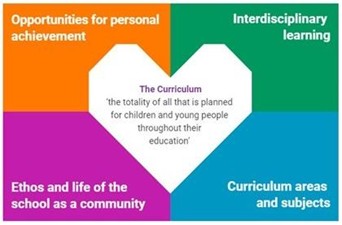
We define our curriculum as the totality of all that is planned for our pupils. This is experienced across four distinct but interconnected contexts

  • Ethos and Life of the School as a Community:Building a safe, secure environment where children feel valued and develop a sense of belonging.
  • Curriculum Areas and Subjects:Providing a broad general education that balances knowledge and skills.
  • Interdisciplinary Learning (IDL): Helping children make connections across different subjects and apply their learning to real-life situations.
  • Opportunities for Personal Achievement: Recognising and celebrating success both within and beyond the classroom to build confidence.
Opportunities for personal Interdisciplinary achievement learning The Curriculum the totality of all that is planned for children and young people throughout their education' Ethos and life of the school as a community Curriculum areas and subjects

The Four Contexts for Learning

We define our curriculum as the totality of all that is planned for our pupils. This is experienced across four distinct but interconnected contexts

  • Ethos and Life of the School as a Community:Building a safe, secure environment where children feel valued and develop a sense of belonging.
  • Curriculum Areas and Subjects:Providing a broad general education that balances knowledge and skills.
  • Interdisciplinary Learning (IDL): Helping children make connections across different subjects and apply their learning to real-life situations.
  • Opportunities for Personal Achievement: Recognising and celebrating success both within and beyond the classroom to build confidence.
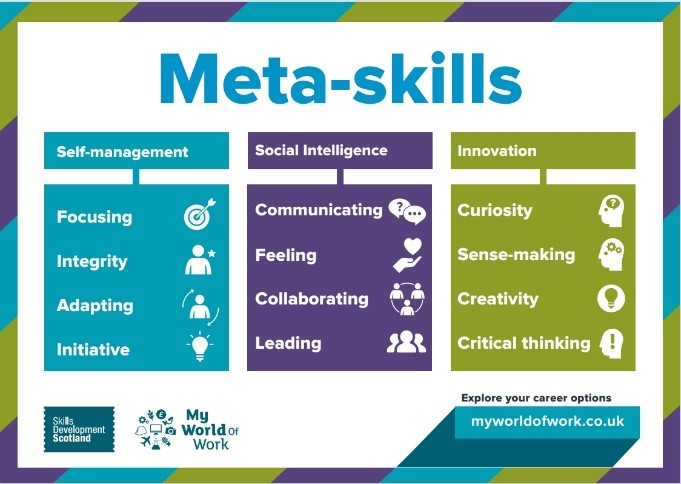
Meta-skills Self-management Social Intelligence Innovation Focusing Communicating ... Curiosity Integrity Feeling Sense-making Adapting Collaborating Creativity Initiative Leading Critical thinking Skills Development Scotland My World of Work Explore your career options myworldofwork.co.uk

Foundations Underpinned by Rights and Design Principles

Our curriculum is built on the Rights of the Child. We believe every child is entitled to a coherent curriculum from 3 to 18 that maximises their individual potential. We are proud to be a Gold Rights Respecting School and support pupil participation in all aspects of school life.
2025 2028 Rights Respecting Schools UNITED KINGDOM unicef Gold Rights Respecting

Our curriculum design is guided by seven key principles:

  • Challenge and enjoyment: Every child should find learning motivating and experience an appropriate level of challenge.
  • Breadth: A wide range of experiences in and out of the classroom.
  • Progression: Building continuously on earlier knowledge from nursery through to secondary.
  • Depth: Developing the capacity for advanced levels of thinking.
  • Coherence: Clear links between different strands of learning.
  • Relevance: Ensuring children understand the purpose and value of their learning.
  • Personalisation and choice: Responding to individual needs and supporting unique talents.
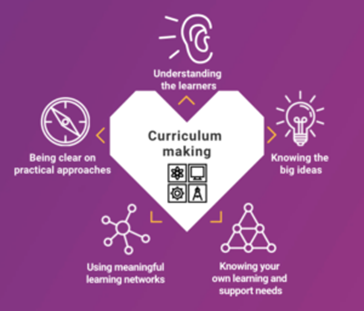
=@ Understanding the learners Being clear on practical approaches Curriculum making A Knowing the big ideas Using meaningful learning networks Knowing your own learning and support needs

Here are links to some useful information regarding a Curriculum for Excellence(CfE): 

Teachers at Westerton plan exciting experiences and outcomes for learners using the 7 key principles of curriculum design. Please read this information leaflet for further information.